

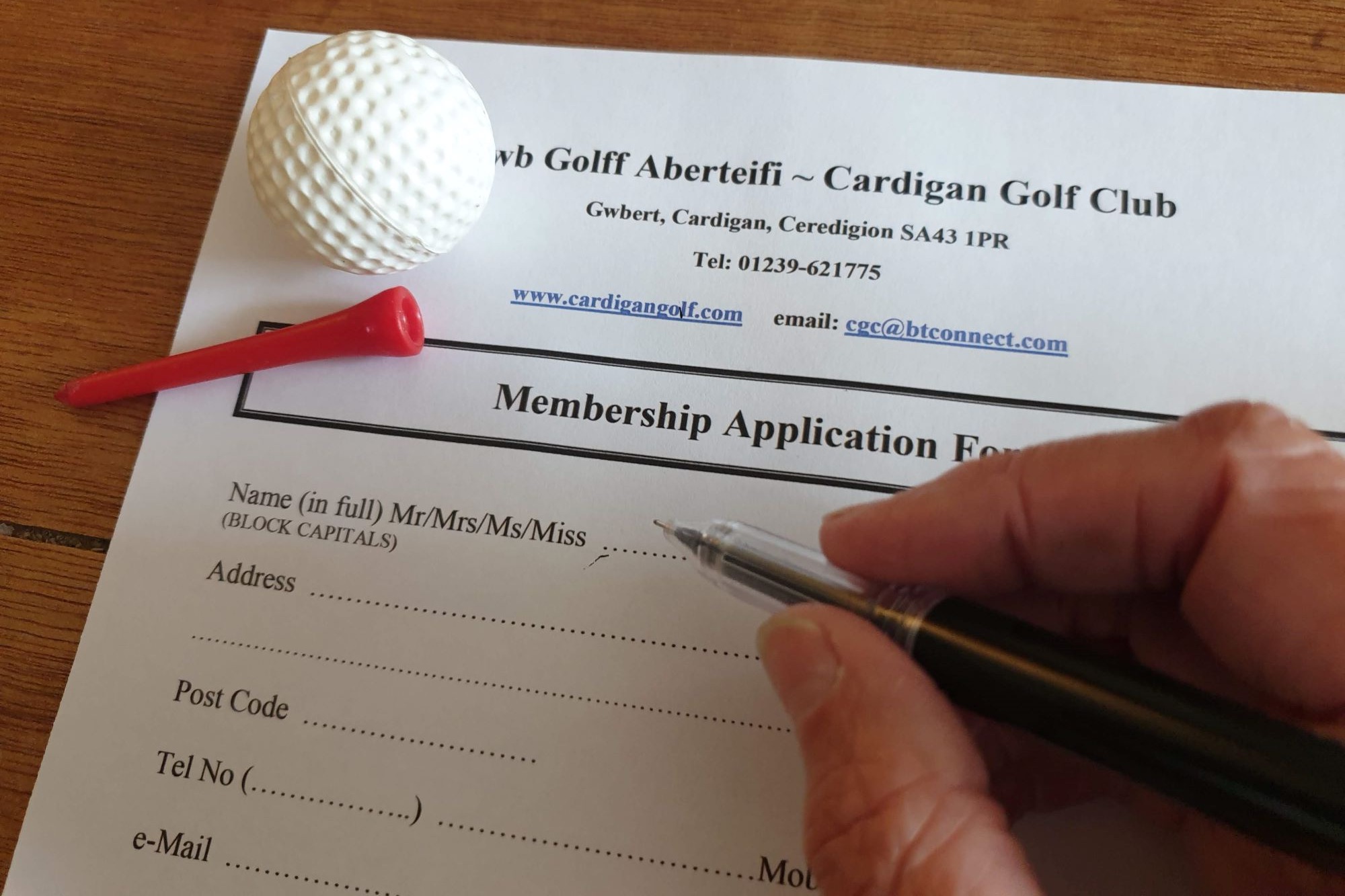
A club in the Midlands showed me their membership application last winter. Four A4 pages. A box for the applicant's employer. A box for their spouse's employer. Two proposers who both had to be full members of at least three years' standing. A declaration to be signed in wet ink. And, at the bottom, a line explaining that applications are considered by the Membership Committee, which meets every six weeks.
The club had spent £900 that month on advertising to attract new members. The ads worked. Two hundred and forty people clicked. Thirty-one downloaded the form. Four came back.
The ads were not the problem.
The moment you lose them
Think about the person on the other end. It is a Sunday evening. They have been thinking about joining a club for a couple of months — maybe they have been playing a lot of visitor golf, maybe a friend keeps asking. They see your ad, they are curious, they tap through on their phone.
They are three seconds from being a lead. And then they meet a PDF.
Not a form. A PDF. Which they cannot fill in on a phone. Which asks them to find a printer, which they do not own, on a Sunday. Which then asks them for two proposers — two people they have not met yet, because the entire reason they are on your website is that they do not currently belong to your club.
We have built a joining process that requires you to already be part of the club before you are allowed to join the club.
They close the tab. Not because they did not want to join. Because on a Sunday evening, at that particular moment of enthusiasm, joining your club required more effort than they had available. That enthusiasm does not reliably come back.
What the old process actually costs
Let us do the arithmetic properly, because it is more brutal than most committees expect.
Take a club with a full membership at £1,150 a year, average member tenure of seven years, and average annual secondary spend of £480 in the bar, pro shop and competition fees. That is a lifetime value of roughly £11,400 per member, before you count the guest green fees they bring in or the societies they introduce.
| Stage | Old process | Modernised |
|---|---|---|
| Clicked the membership page | 240 | 240 |
| Started an enquiry | 31 (PDF downloads) | 68 (short web form) |
| Completed the enquiry | 9 | 61 |
| Contacted within 24 hours | 4 | 61 |
| Booked a visit or tour | 3 | 27 |
| Joined | 2 | 11 |
Nine extra members from the same spend. At £11,400 lifetime value that is £102,600 of value, from the same advertising budget, the same course, the same clubhouse. Nothing changed except the distance between "I am interested" and "someone at the club has spoken to me".
Run that over a year and you are looking at somewhere between 30 and 50 members you never met. That is the number I put on the whiteboard in every membership workshop, and it is the number that ends the argument faster than any slide about digital transformation.
Across the club audits we have run, the single strongest predictor of whether an enquiry becomes a member is not the quality of the course, the price, or even the waiting list. It is how many hours pass before a human being makes contact. Under one hour, conversion is transformed. After 48 hours, you are mostly emailing people who have already joined somewhere else.
"But we need to protect the club"
This is the objection every time, and it deserves a serious answer rather than a sneer, because the people raising it are usually right about what they are protecting.
A golf club is not a gym. The thing you are selling is partly the other members. A club that lets anyone in with a card ends up with a different atmosphere, and the members who have been there twenty years can feel that shift long before it shows up in the accounts. Vetting is not snobbery. It is product management.
But here is the distinction that gets lost: vetting is a filter, not a gate. A filter sits in the middle of the process and removes the people who are not right. A gate sits at the front and stops everyone, including the people you desperately want.
The two proposers requirement is a gate. It filters out almost nobody problematic — a determined unsuitable applicant will find two signatures — while filtering out virtually every good candidate who has just moved to the area. Which is precisely the person most clubs say they want.
You can keep every ounce of vetting and still lose the gate. Here is how.
The 30-day fix
None of this requires a new website, a new database or a committee resolution that takes two AGMs. Most clubs can do all six of these inside a month.
1. Split the enquiry from the application
These are two different documents doing two different jobs, and merging them is the original sin. The enquiry is four fields: name, email, phone, and "what kind of membership are you interested in?". That is it. The application — the full form with the declarations and the proposers — comes later, after a human conversation, when the person is already emotionally committed.
2. Put the enquiry form on the page, not behind a download
Native web form, works on a phone, three taps to submit. No PDF. No "email us for an application pack". Every additional step costs you roughly half your remaining audience.
3. Publish the price
"Please contact us for membership rates" is read as "this will be expensive and slightly humiliating to ask about". Clubs that publish rates get fewer enquiries and dramatically more members, because the enquiries they get are from people who have already decided they can afford it.
4. Reply within one hour, in office hours
Not an autoresponder — a person. It can be ninety seconds of work: "Hi Sarah, thanks for getting in touch. Are you free for a quick call tomorrow, or would you rather come and see the place first?" One named person owns this. If nobody owns it, nobody does it.
5. Offer the visit before the form
The goal of the first contact is not to progress the paperwork. It is to get them on site. Nine rounds out of ten, someone who walks the course, has a coffee on the terrace and meets two friendly members will join. Someone who receives a well-formatted PDF will not.
6. Handle proposers internally
If your constitution requires two proposers, keep it — but make it your job to find them, not theirs. Most clubs have a handful of long-standing members who would happily meet a prospective member for a coffee and a nine-hole knock. Ask them. That conversation is better vetting than any signature box, and it is a far warmer welcome.
One club we work with turned this into their whole membership pitch. Every prospective member is invited to a standing Wednesday morning coffee with the captain and two members. No forms, no sales pitch, no obligation. Their conversion from tour to joined went from just under a third to more than seven in ten, and their proposer problem disappeared, because everybody who came had met two members by 10:30.
Rewriting the form itself
When you do get to the full application, go through it line by line and ask one question of every field: what decision does this information change?
- Employer. Unless you offer a corporate rate, this changes nothing. Cut it.
- Spouse's occupation. This has not changed a decision since about 1987. Cut it.
- Handicap index. Keep — it affects competition eligibility.
- Previous clubs. Keep, and actually use it. A quick call to a previous secretary is the most useful vetting you will do all year.
- Date of birth. Keep if you have age-banded categories. Otherwise cut.
- Emergency contact. Keep, but collect it after they join, not before.
Most four-page applications compress to one side of A4 without losing a single thing the committee actually uses. And a one-page form that can be signed on a phone gets returned the same day rather than sitting on a kitchen worktop for three weeks.
The six-week committee meeting
This one is worth a serious conversation. If the membership committee meets every six weeks, an applicant who submits the day after a meeting waits forty-one days for a decision. During which they are paying visitor green fees somewhere — quite possibly at the club down the road that said yes in four days.
The usual fix is delegated authority: the secretary or general manager can approve any application that meets agreed criteria, with the committee ratifying at the next meeting and retaining the right to refuse anything unusual. The governance is intact. The forty-one days becomes forty-eight hours.
What to do this week
Pick the smallest version of this that you can do without asking anyone's permission:
- Open your membership page on your own phone. Try to enquire. Time it. If it takes more than 60 seconds or requires a printer, you have found this month's project.
- Put a four-field enquiry form on that page. Today, if your site allows it.
- Name the person who replies, and agree the one-hour target out loud in a team meeting.
- Count what happens for four weeks. Enquiries received, replied within an hour, tours booked, joined. Four numbers on a whiteboard.
Then take those four numbers to the committee. You will not need a presentation about digital transformation. The numbers do the arguing for you.
The clubs winning at membership right now are not the ones with the best courses. Plenty of very ordinary courses have full membership and a waiting list. They are the clubs that made it easy to say yes at the exact moment somebody wanted to.